
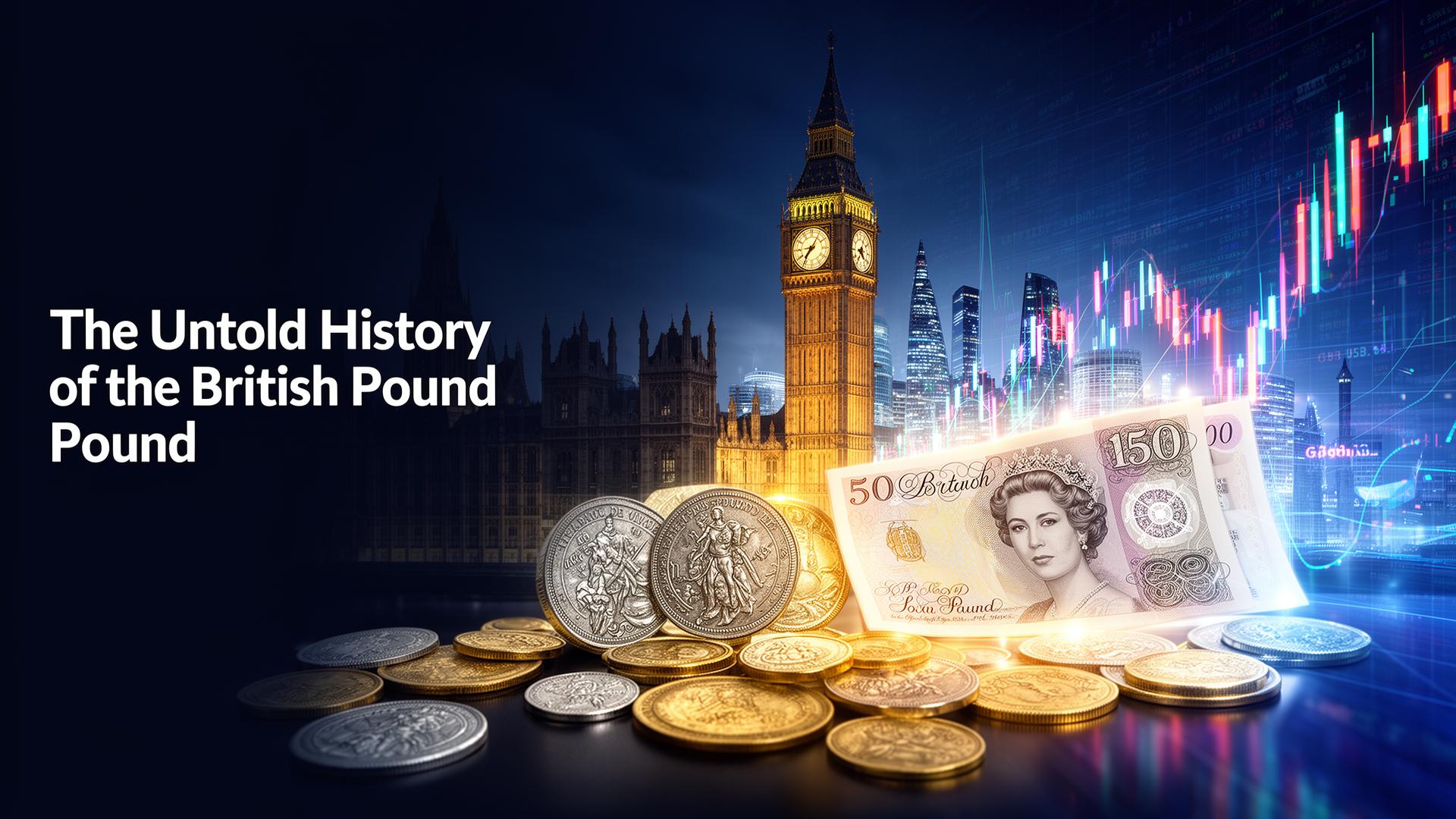
The Untold History of the British Pound: How the World’s Oldest Currency Still Dominates Global Finance
The British pound is one of the most recognizable and influential currencies in the world. Known by traders as GBP and symbolized by £, the pound has survived wars, economic crises, political change, and technological revolutions for more than 1,000 years.
Today, the pound remains a major force in global finance and forex trading. But how did it become one of the strongest and most trusted currencies in history?
In this guide, we explore the complete history of the British pound currency, from its ancient origins to its modern role in the international financial system.
What Is the British Pound?
The British pound, officially called Pound Sterling, is the national currency of the United Kingdom. It is also used in several British territories and remains one of the most traded currencies in the global forex market.
The pound is commonly referred to as:
- GBP (Great British Pound)
- Pound Sterling
- Sterling
- The Pound (£)
The currency is issued and regulated by the Bank of England.
The Origins of the Pound Sterling

Ready to Trade GBP Like a Pro?
Download the Forex Broker 500 Trader’s Guide and start understanding currency movements, market structure, and trading opportunities today.
The history of the pound dates back to Anglo-Saxon England, making it one of the oldest currencies still in use today.
The term “pound sterling” originally referred to a pound weight of silver. In medieval England, 240 silver pennies were equal to one pound of sterling silver. This system laid the foundation for Britain’s monetary structure for centuries.
Why Is It Called “Sterling”?
Historians believe the word “sterling” may have originated from:
- Small silver Norman coins marked with stars
- The Old English term for “little star”
- Early high-quality silver coins used in trade
Regardless of its exact origin, “sterling” eventually became synonymous with reliability and value.
The First English Pound Coins
The first pound coin was introduced during the reign of Henry VII in 1489.
Known as the “sovereign,” the coin symbolized wealth and royal authority. Later, under Henry VIII, the pound became more standardized as England’s official currency.
At the time, the British monetary system consisted of:
- 12 pennies = 1 shilling
- 20 shillings = 1 pound
- 240 pennies = 1 pound
This system remained in place for hundreds of years.
How the British Pound Became a Global Currency
During the 18th and 19th centuries, the British Empire expanded rapidly across the world. As Britain became a dominant economic and naval power, the pound also grew in international importance.
By the 1800s, the pound sterling had become the world’s leading reserve currency.
International merchants, banks, and governments trusted the pound because of:
- Britain’s powerful economy
- Global trade influence
- Political stability
- Strong banking institutions
At one point, most international trade transactions were settled in pounds rather than dollars.
The Gold Standard Era
One of the biggest reasons for the pound’s global dominance was the Gold Standard.
Under this system, the value of the pound was directly linked to gold.
1 Pound Sterling∝Fixed Quantity of Gold
This meant people could exchange paper money for a fixed amount of gold, helping maintain currency stability and investor confidence.
Why the Gold Standard Mattered
The Gold Standard helped:
- Reduce inflation
- Stabilize exchange rates
- Increase international trust
- Support global trade growth
However, the system became difficult to maintain during major global conflicts.
World Wars and the Decline of the Pound
During World War I and World War II, Britain spent enormous amounts of money funding military operations.
To finance these wars, governments printed more money and borrowed heavily. As a result:
- Gold reserves declined
- Inflation increased
- Confidence in the pound weakened
Eventually, the United States dollar overtook the pound as the world’s dominant reserve currency.
The Bretton Woods System
After World War II, global economies adopted the Bretton Woods system.
Under this framework:
- The US dollar was linked to gold
- Other currencies, including the pound, were pegged to the dollar
This created fixed exchange rates and helped rebuild international trade after the war.
The system lasted until the early 1970s when major economies shifted toward floating exchange rates.
Decimalisation: A Historic Change in British Currency
One of the most important changes in British currency history happened in 1971.
The United Kingdom abandoned the old pounds-shillings-pence system and introduced decimal currency.
Before Decimalisation
- 1 pound = 20 shillings
- 1 shilling = 12 pennies
After Decimalisation
1 Pound=100 Pence
This simplified transactions and aligned Britain with modern international monetary systems.
New coins such as the 1p, 2p, 5p, 10p, and 50p were gradually introduced into circulation.
The British Pound in Modern Forex Trading
Today, GBP remains one of the most actively traded currencies in the forex market.
Major GBP trading pairs include:
- GBP/USD
- EUR/GBP
- GBP/JPY
- GBP/AUD
Forex traders closely monitor the pound because it is heavily influenced by:
- Interest rate decisions
- UK inflation data
- Economic growth reports
- Political developments
- Global risk sentiment
The GBP/USD pair is often called “Cable,” a nickname dating back to transatlantic communication cables used for currency pricing between London and New York.
Why the Pound Is Still Valuable Today
Despite economic challenges over the decades, the British pound remains one of the strongest currencies globally.
Key reasons include:
Strong Financial Institutions
The United Kingdom has one of the world’s most developed banking systems.
Global Investor Confidence
Investors still view GBP as a relatively stable major currency.
London’s Financial Influence
London remains one of the world’s largest financial centers.
High Liquidity in Forex Markets
GBP is consistently among the top traded currencies worldwide.
Interesting Facts About the British Pound
- The pound is older than the US dollar.
- GBP is one of the world’s top reserve currencies.
- The pound symbol (£) comes from the Latin word “Libra.”
- The Bank of England was founded in 1694.
- The GBP/USD pair is among the most volatile forex pairs.
Final Thoughts
The history of the British pound currency is a story of resilience, economic power, and global influence. From medieval silver coins to high-speed digital forex trading, the pound has remained a cornerstone of international finance for centuries.
For traders and investors, understanding the evolution of GBP provides valuable insight into how currencies gain — and maintain — global trust.
As financial markets continue to evolve, the British pound remains one of the most important currencies to watch in the world economy.
🚀 Ready to Get Funded and Start Trading Like a Pro?
Stop trading alone and start trading with capital that matches your skill.
With Forex Broker 500, you don’t just learn the markets — you position yourself to get funded and scale like a professional trader. Whether you’re building consistency or ready to prove your strategy, this is your gateway to real trading capital.
👉 Get access to structured trading systems
👉 Build consistency with professional-grade tools
👉 Unlock funding opportunities as you grow
👉 Trade with confidence, not limitation
💰 Take the Next Step
If you’re serious about trading, it’s time to stop watching the markets and start participating in them with real funding behind you.
👉 Join Forex Broker 500 today and start your journey toward becoming a funded trader.

No responses yet