
Introduction
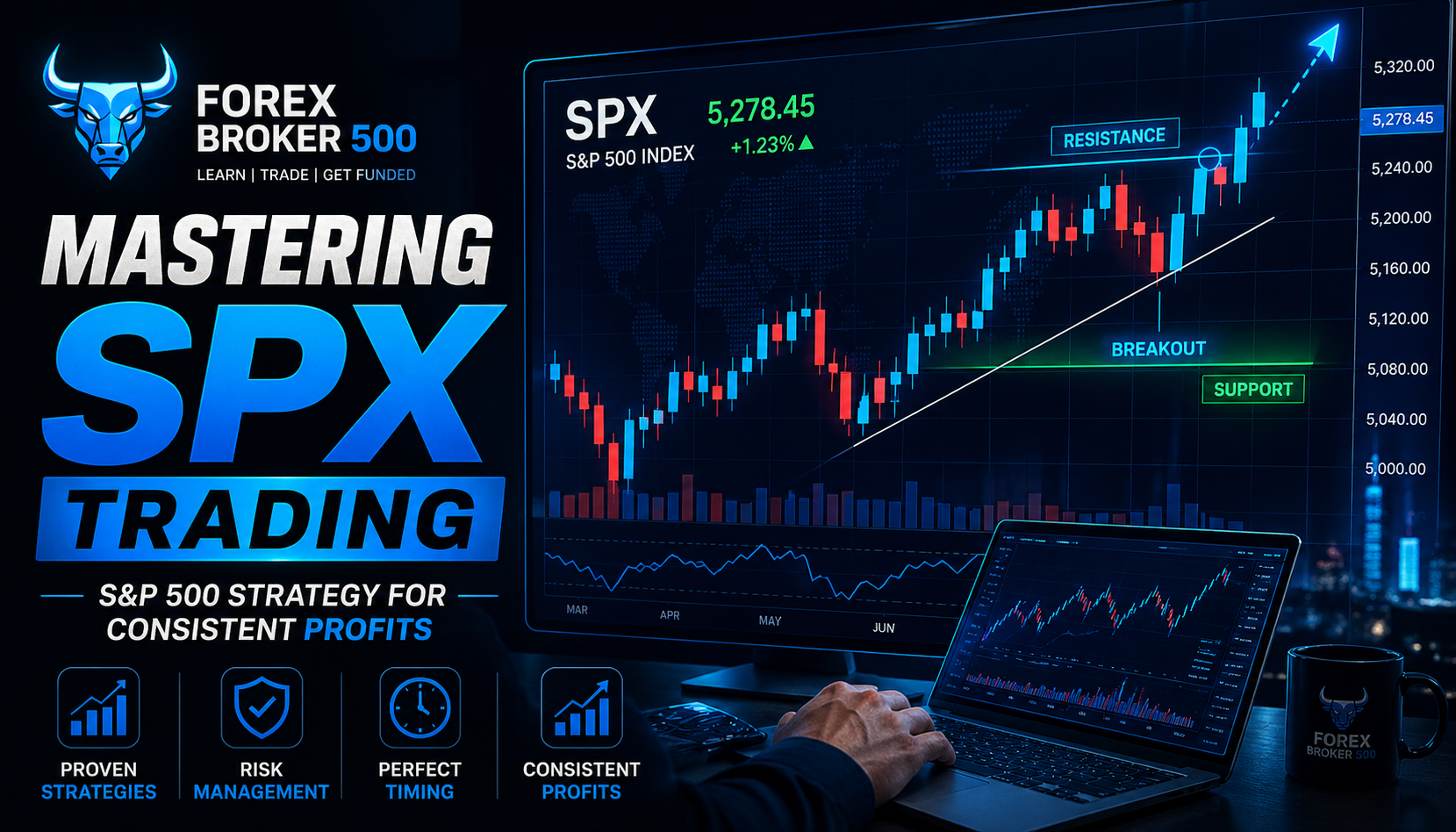
Trading the S&P 500 through SPX is one of the most powerful ways to access institutional-level opportunities in the financial markets. Unlike forex pairs or single stocks, SPX reflects the overall strength of the U.S. economy, making it a favorite among professional traders.
But here’s the reality—most traders approach SPX the wrong way. They overtrade, ignore volatility, and treat it like a normal pair. That’s why consistency becomes difficult.
In this guide, you’ll learn how to master SPX trading using structured strategies, disciplined execution, and smart risk management.
What is SPX (S&P 500 Index)?

The S&P 500 (SPX) represents the performance of 500 of the largest companies in the United States. It’s widely considered the benchmark of the global stock market.
When you trade SPX, you’re not trading a single asset—you’re trading market sentiment, institutional flows, and macroeconomic direction.
Why SPX is Different from Forex
SPX doesn’t behave like EUR/USD or GBP/JPY. It has its own personality:
- Strong trending behavior
- Sharp reversals during news
- High volatility during US sessions
- Institutional manipulation zones (liquidity grabs)
Unlike forex, SPX is heavily influenced by:
- Economic data (CPI, NFP, interest rates)
- Stock market earnings
- Investor sentiment
Understanding this difference is the first step toward consistency.
Best Time to Trade SPX

Timing is everything when trading SPX.
Key Trading Sessions:
- New York Open (15:30 SAST) → Highest volatility
- First Hour (15:30 – 16:30 SAST) → Best setups
- Power Hour (21:00 – 22:00 SAST) → Strong moves before close
Avoid trading during low-volume periods—SPX becomes unpredictable and choppy.
Proven SPX Trading Strategies
1. Opening Range Breakout (ORB Strategy)

This is one of the most effective strategies for SPX traders.
How it works:
- Mark the high and low of the first 15–30 minutes
- Wait for a breakout
- Enter in the direction of the breakout
- Target continuation moves
Pro Tip: Combine with volume or momentum indicators for confirmation.
2. Liquidity Sweep + Reversal

SPX often takes out highs/lows before reversing.
Setup:
- Price sweeps previous high/low
- Sharp rejection forms
- Enter opposite direction
This is a classic “smart money” move.
3. Trend Continuation (Pullback Strategy)

Trade with the trend, not against it.
Steps:
- Identify strong trend
- Wait for pullback
- Enter on confirmation
- Ride the move
This is where most consistent traders make their profits.
Risk Management for SPX
Let’s be direct—SPX can destroy accounts if you ignore risk.
Key Rules:
- Risk only 1–2% per trade
- Always use stop-loss
- Avoid revenge trading
- Reduce lot size during high volatility
SPX moves fast. Discipline matters more than strategy.
Common Mistakes to Avoid
- Overtrading during choppy sessions
- Trading without a clear bias
- Ignoring economic news
- Using large lot sizes
- Chasing moves
Most losses don’t come from bad strategies—they come from poor execution.
Tools to Improve Your SPX Trading
To trade efficiently, you need the right tools:
- Lot size calculator
- Risk management tools
- Economic calendar
- Currency and index converters
👉 Access all of these inside the Trader Toolkit App:
Final Thoughts
Mastering SPX trading isn’t about finding a “holy grail” strategy—it’s about discipline, timing, and consistency.
If you focus on:
- High-probability setups
- Proper risk management
- Session timing
You can turn SPX into one of your most profitable markets.
Take the Next Step
If you’re serious about scaling your trading and accessing real capital:
Learn how to trade with funding, not your own money, and take your trading to the next level.
Disclaimer
Forex Broker 500 is an educational platform and not a broker. We do not accept deposits or execute trades. We may partner with proprietary trading firms and affiliate providers. All trading involves risk, and past performance does not guarantee future results.

No responses yet