
Introduction
One of the biggest questions traders ask is:
“When should I increase my lot size?”
Get this wrong, and you can wipe out your account.
Get it right, and you can scale your profits consistently.
The truth is — increasing lot size has nothing to do with confidence…
and everything to do with consistency, discipline, and risk management.
What Is Lot Size in Forex?
Lot size refers to the volume of your trade — essentially how much you are risking per position.
For example:
- 0.01 lot = micro (low risk)
- 0.10 lot = mini
- 1.00 lot = standard (high risk)
The bigger your lot size:
- The bigger your potential profit
- The bigger your potential loss
👉 That’s why increasing lot size too early is one of the fastest ways traders lose money.
Why Most Traders Increase Lot Size Too Early
Many beginners fall into the same trap:
- They win a few trades
- Feel confident
- Increase lot size
- Then lose everything
This happens because they mistake short-term success for long-term consistency.
Trading isn’t about one or two good trades.
It’s about repeatable performance over time.
The Right Time to Increase Lot Size
Let’s get straight to it.
You should only increase your lot size when:
✅ 1. You Are Consistently Profitable
Consistency means:
- Winning over a series of trades
- Not just one lucky trade
- Maintaining steady growth
👉 A good benchmark is at least 20–30 trades with consistent results.
✅ 2. You Have a Proven Strategy
You must:
- Follow a clear trading plan
- Use the same setup repeatedly
- Understand why your trades work
If you’re still guessing — don’t increase lot size.
✅ 3. You Follow Strict Risk Management
Before scaling, you should already:
- Risk only 1–2% per trade
- Use stop-loss consistently
- Avoid overtrading
👉 Increasing lot size without risk control = account destruction.
✅ 4. You Are Emotionally Disciplined
This is where most traders fail.
Ask yourself:
- Can you handle losses without revenge trading?
- Do you stick to your plan under pressure?
If not — increasing lot size will amplify your mistakes.
How to Increase Lot Size Safely
Instead of jumping from 0.01 to 0.10…
Scale gradually:
- 0.01 → 0.02
- 0.02 → 0.03
- 0.03 → 0.05
This allows you to:
- Adjust psychologically
- Maintain control
- Protect your account
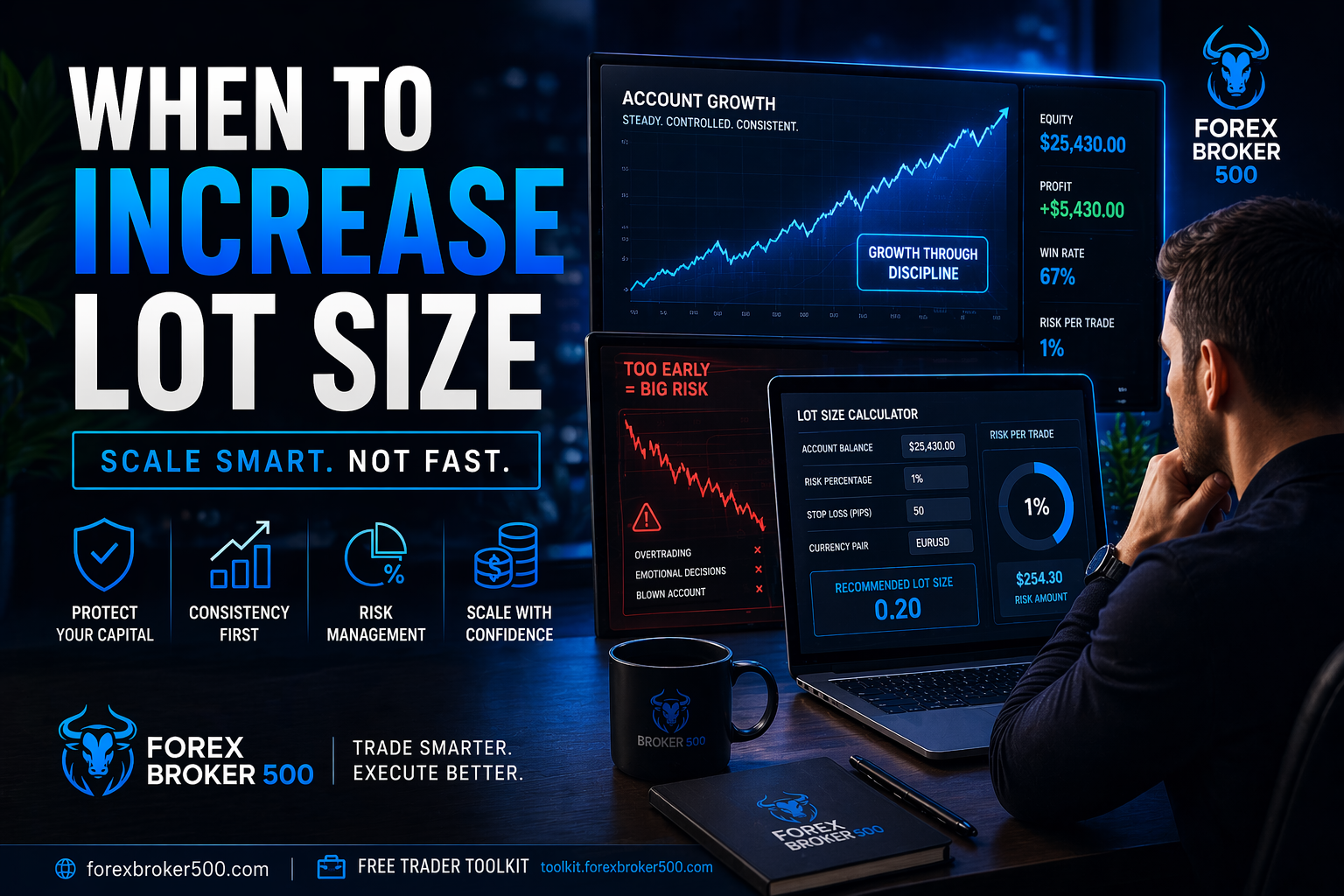
Lot Size and Account Growth
As your account grows, your lot size can increase naturally.
Example:
- $1,000 account risking 1% = $10 per trade
- $2,000 account risking 1% = $20 per trade
👉 This is called scaling through account growth, not emotional decisions.
Common Mistakes to Avoid
❌ Increasing After a Winning Streak
A few wins don’t mean consistency.
❌ Doubling Lot Size
Too aggressive and dangerous.
❌ Ignoring Risk Percentage
Lot size must match your account size.
❌ Trading Without a Plan
Scaling chaos only leads to bigger losses.
Lot Size in Funded Trading
If your goal is to trade with prop firms like FTMO, lot size control becomes even more important.
Funded accounts have strict rules:
- Maximum daily loss
- Overall drawdown limits
- Consistency requirements
👉 Increasing lot size too early can instantly disqualify you.
That’s why professional traders focus on:
- Stability first
- Growth second
Using Tools to Manage Lot Size
To trade professionally, you need proper tools.
At Forex Broker 500, we recommend:
- Lot size calculators
- Risk management tools
- Currency converters
👉 These help you calculate exact position sizes based on your risk.
🧰 Use the FREE Trader Toolkit:
The Real Secret to Scaling in Forex
Here’s what most traders don’t understand:
👉 You don’t grow your account by increasing lot size.
👉 You grow your account by improving your skill.
Lot size is just a multiplier.
If your strategy is bad → bigger losses
If your strategy is good → bigger profits
🚀 Take the Next Step
If you want to trade seriously, focus on:
- Consistency
- Risk management
- Discipline
Then scale — not before.
👉 Start your funded trading journey:
Disclaimer
Forex Broker 500 is an educational platform and does not act as a broker or accept client deposits. We may earn commissions through affiliate partnerships. Trading involves risk and is not guaranteed income.

No responses yet