
Introduction
In trading, your biggest enemy isn’t the market — it’s your emotions.
Fear and greed silently influence:
- Your entries
- Your exits
- Your risk decisions
Most traders don’t lose because of strategy… they lose because they cannot control fear and greed in trading.
The good news? With the right mindset — and the right tools — you can stay in control.
What Is Fear in Trading?

Fear is the emotional response to potential loss.
It causes traders to:
- Close trades too early
- Avoid valid setups
- Panic during drawdowns
- Move stop-loss levels irrationally
Real Scenario:
You enter a perfect setup. Price pulls back slightly… fear kicks in… you close the trade early.
Minutes later — price hits your original target.
👉 Fear didn’t protect you. It cost you profit.
What Is Greed in Trading?

Greed is the desire to make more profit than your strategy allows.
It leads to:
- Overtrading
- Overleveraging
- Ignoring take-profit levels
- Holding trades too long
- Chasing the market (FOMO)
Real Scenario:
You’re already in profit. Your plan says “exit”… but greed says “just a bit more.”
The market reverses — and profit turns into loss.
👉 Greed doesn’t grow accounts — discipline does.
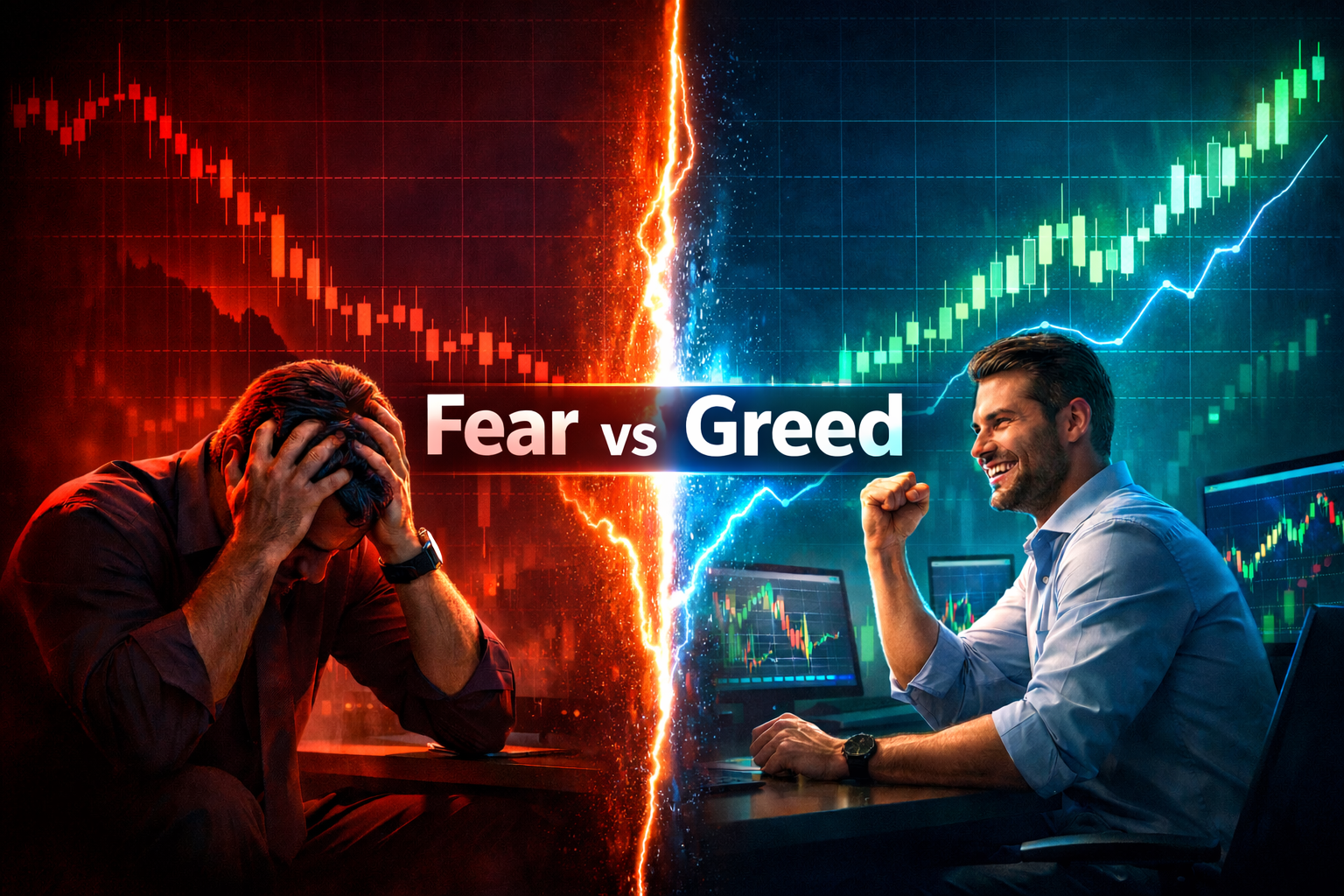
Fear vs Greed: The Internal Battle

Every trader experiences this:
- Fear tells you: “Close now before you lose.”
- Greed tells you: “Hold longer, you can make more.”
The problem?
👉 Both emotions push you away from your trading plan.
Why Most Traders Struggle
Here’s the typical cycle:
- Small win → confidence grows
- Bigger risk → greed kicks in
- Loss happens → fear takes over
- Hesitation → missed trades
- Frustration → revenge trading
This loop continues until the account is damaged or blown.
How to Control Fear and Greed in Trading
1. Use Fixed Risk Per Trade
Risking 1–2% per trade reduces emotional pressure.
👉 When your risk is controlled, fear becomes manageable.
2. Trade With a Structured Plan
Before entering any trade, define:
- Entry
- Stop-loss
- Take profit
This is where tools like the Trader Toolkit become powerful.
Instead of guessing position size or risk manually, you can:
- Calculate exact lot size
- Set proper risk levels
- Maintain consistency across trades
👉 This removes emotional decision-making.
3. Let Your Tools Enforce Discipline
Emotions thrive in uncertainty.
Using a structured system like the Trader Toolkit helps you:
- Stick to predefined risk
- Avoid overleveraging
- Plan trades before execution
When your numbers are clear, your emotions have less control.
4. Respect Stop-Loss and Take Profit
Your:
- Stop-loss protects you from fear
- Take profit protects you from greed
The mistake?
Traders override both — emotionally.
5. Focus on Execution, Not Money
If you focus on money:
- Fear increases during losses
- Greed increases during wins
Instead, focus on:
- Following your plan
- Executing clean trades
👉 Money is a result — not the goal.
6. Avoid Overtrading
Overtrading is driven by:
- Greed (wanting more profit)
- Fear (trying to recover losses)
A disciplined trader waits for quality setups, not quantity.
7. Track Your Behavior
Journaling helps identify:
- Emotional mistakes
- Pattern behavior
- Weaknesses in discipline
Over time, this builds self-awareness — the key to mastering trading psychology.
Where Trader Toolkit Fits In
Most traders fail because they:
- Trade without structure
- Guess position sizes
- Let emotions influence decisions
The Trader Toolkit helps solve this by giving you:
✔ Position size calculator
✔ Risk management tools
✔ Structured decision-making support
✔ Consistency across trades
👉 Instead of reacting emotionally, you execute logically.
Pro Trader Mindset
Professional traders:
- Follow rules, not emotions
- Accept losses without panic
- Take profits without greed
- Trust their system
They don’t eliminate fear and greed —
👉 they control them through structure and discipline.
Final Thoughts
Fear and greed are part of trading — you can’t remove them.
But you can control them by:
- Using proper risk management
- Following a structured plan
- Leveraging tools that enforce discipline
👉 The difference between losing traders and profitable traders is simple:
One trades emotionally. The other trades with control.
🚀 Take Control of Your Trading
If you want to remove emotional decision-making and trade with structure:

No responses yet